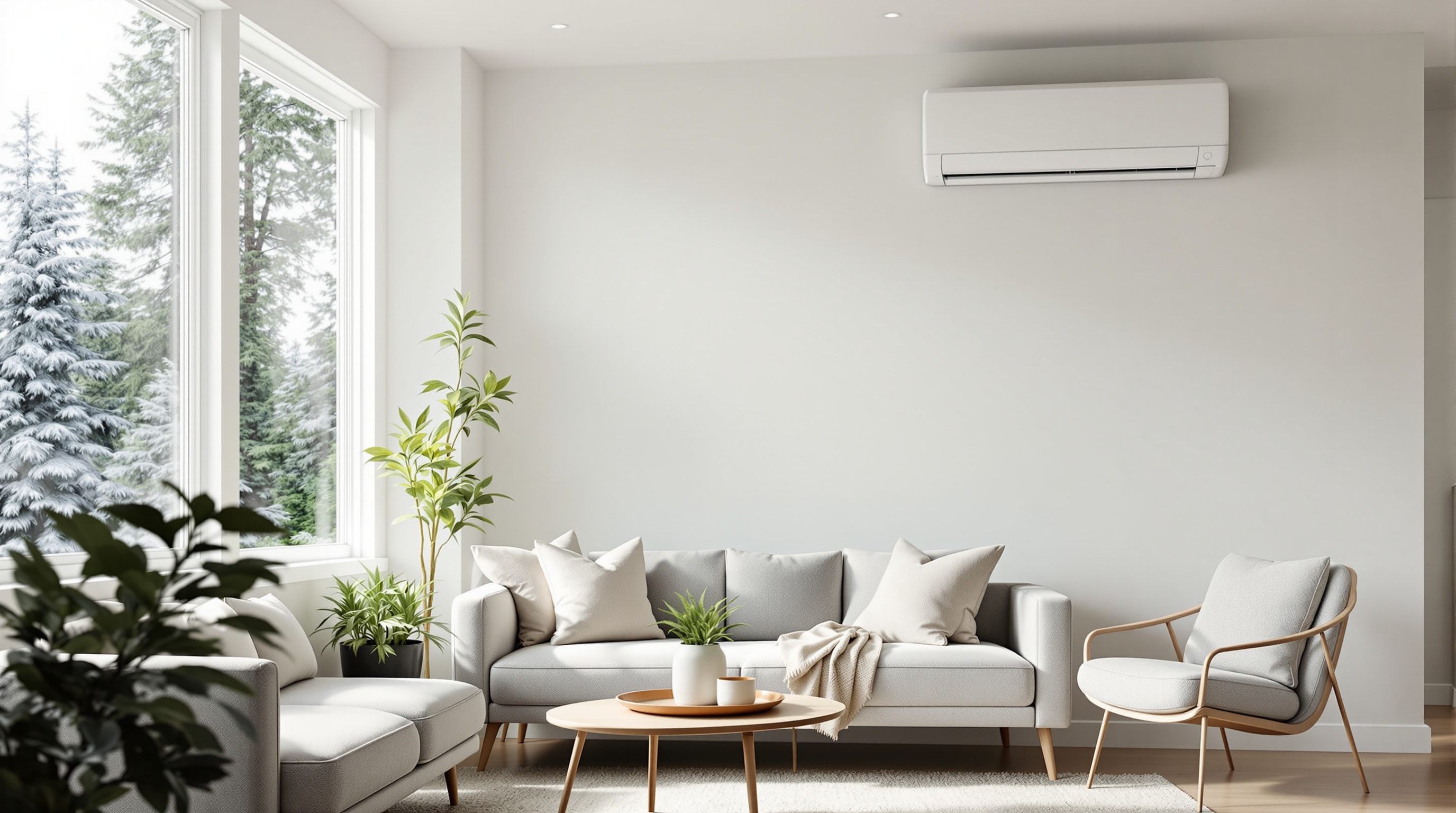
Many older Pacific Northwest homes were built with electric baseboard or wall heaters and no ductwork at all. For decades that meant expensive, inefficient heating with no easy path to improvement. The ductless heat pump (DHP), often called a mini-split, opened that path. It delivers efficient heating and cooling without any ducts, and it has become one of the region's signature retrofit measures.
How a Ductless Heat Pump Works
A DHP has two main parts: an outdoor compressor unit and one or more indoor "heads" mounted on walls or ceilings, connected by a small refrigerant line through a three-inch hole in the wall. Like all heat pumps, it moves heat rather than creating it — pulling warmth from outside air in winter (yes, even cold air contains usable heat) and reversing in summer to provide cooling. Modern inverter-driven compressors ramp smoothly up and down, which is far more efficient than the on-off cycling of older systems.
Why the Northwest Adopted Them Early
The region's large stock of electrically heated, duct-free homes made DHPs an obvious win, and regional programs ran some of the earliest coordinated ductless heat pump initiatives in the country. Replacing electric resistance heat with a ductless heat pump can cut heating energy use dramatically while adding air conditioning that many Northwest homes never had — an increasingly valued benefit during hotter summers.
Where They Fit Best
A single indoor head works well for an open-plan main living area; multi-head systems can serve several rooms. DHPs are most cost-effective when they displace electric resistance heat, and they pair naturally with a well-sealed, well-insulated envelope. They are less transformative in homes that already have efficient ducted heating, though they can still add zoning and cooling. Cold-climate models rated for low temperatures perform well through typical Northwest winters.
Installation and Maintenance
Professional installation matters: correct sizing, head placement, and refrigerant charge all affect real-world efficiency. Oversizing is a common mistake that hurts both comfort and savings. Maintenance is light — mainly keeping the washable filters clean and the outdoor unit clear of debris. For an overview of ductless heat pumps, ENERGY STAR's ductless heating and cooling page is a good neutral reference.
Incentives and Next Steps
Because ductless heat pumps deliver reliable regional savings, utilities and state programs frequently offer rebates for qualifying installations, sometimes with additional incentives for cold-climate models or income-qualified households. As always, verify current offers and required contractor qualifications with your utility before committing. To see how a DHP fits into a whole-home plan, read our residential efficiency guide, and compare it with the field-verified approach in our PTCS and HVAC guide.